
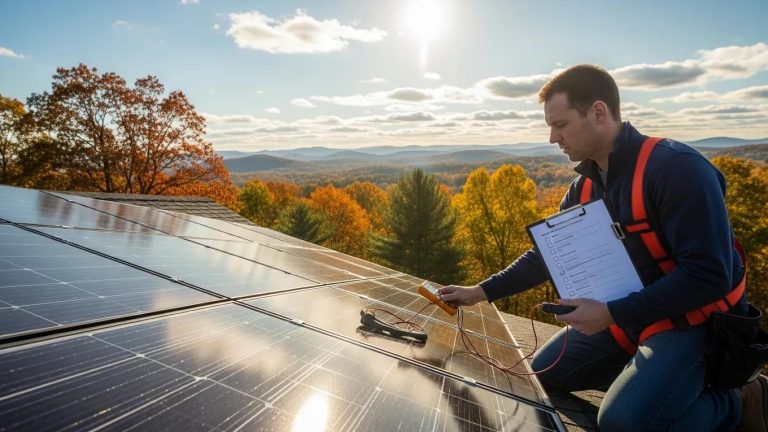
As fall arrives, solar owners should prioritize system efficiency with targeted cleaning, maintenance, and repairs. This guide covers practical steps and best practices to keep your array performing well through the season. You’ll find straightforward cleaning methods, essential maintenance routines, and clear repair guidance designed to preserve performance, extend system life, and reduce long-term costs.
We’ll walk through cleaning tactics, routine upkeep, and common fall issues so you can perform systematic inspections with confidence and understand why regular care pays off for your solar investment.
Key Takeaways
- Clean panels in the fall using soft brushes and mild solutions to maintain sunlight absorption and peak efficiency.
- Do visual checks regularly and schedule professional inspections to catch dirt, damage, or performance drops early.
- Repair cracks, loose mounts, and electrical faults quickly to avoid bigger problems and reduce downtime.
- Fallen leaves, seasonal weather, and pests can all reduce output — proactive management matters.
- Track inverter readings and energy output to spot when maintenance or repairs are needed.
- Plan annual professional inspections and a pre-winter check to maintain reliability and meet warranty terms.
- In the Carolinas, adapt cleaning and inspection frequency to local fall conditions for best results.
- Consistent fall upkeep improves energy efficiency, lowers repair bills, and boosts overall ROI.
- Customer feedback shows that professional fall inspections reliably increase system performance and satisfaction.
Cleaning Techniques
Keeping panels clean is one of the simplest ways to protect performance. Dust, pollen, and leaves reduce sunlight reaching cells and lower energy output. Combine routine cleaning with these practical techniques to maintain peak production.
Essential Cleaning Techniques for Fall Solar Care
- Use Soft Brushes: Soft-bristle brushes remove grime without scratching the glass or coating.
- Gentle Cleaning Solutions: Choose biodegradable, residue-free cleaners to avoid film buildup and preserve panel coatings.
- Optimal Timing for Cleaning: Clean early morning or late afternoon when temperatures are cooler to prevent streaking from quick drying.
These straightforward habits keep panels clear throughout autumn and help maximize sunlight capture as leaf fall increases.
Maintenance Practices
Routine maintenance keeps systems running efficiently year after year. Regular visual checks and performance monitoring help you spot small issues before they become costly repairs.
Key Maintenance Routines for Solar Panels
- Visual Inspections: Look for dirt buildup, cracks, loose hardware, and signs of water pooling to catch problems early.
- Professional Inspections: Schedule a trained technician at least once a year to identify issues you might miss.
- Monitor Performance: Track daily and monthly energy output to detect sudden drops that indicate maintenance is needed.
Regular attention to these routines helps protect performance and extends the useful life of your solar system.
Repair Guidelines
When faults appear, prompt and appropriate repair work minimizes downtime and repair costs. These practices help you manage issues efficiently when they arise.
Steps for Effective Solar Panel Repairs
- Address Common Issues Promptly: Fix visible damage—like cracks, loose mounts, or damaged seals—before they worsen.
- Post-Storm Inspections: After strong winds or hail, inspect panels and mounting hardware for damage or lodged debris.
- Documentation of Repairs: Keep records of work done and parts replaced to track system history and warranty claims.
Following these repair steps will restore system reliability and limit future problems.
What Are the Common Fall Issues Affecting Solar Panel Efficiency?
Fall brings several predictable challenges that can reduce output. Knowing what to watch for helps you stay ahead of seasonal losses.
- Soiling and Debris Accumulation: Falling leaves, twigs, and dust can block sunlight and cut production.
- Weather-Related Damage: Wind-driven debris and heavy rain can dislodge mounts or deposit build-ups that need cleaning.
- Pest Infestations: Birds, rodents, and insects nesting under arrays can cause wiring and structural issues.
Identifying these issues early lets you target cleaning and repairs effectively.
How Do Fall Debris and Weather Impact Solar Panels?
Autumn debris and changing weather directly affect panel performance. Leaves and twigs can layer across modules, blocking sunlight, while wet leaves leave a sticky residue if not removed. High winds can deposit extra debris or loosen mounts, and heavy rain or hail may cause physical damage. It’s important to clear obstructions after storms and inspect mounts and seals for damage. For specialized tools and techniques in managing such conditions, exploring options for solar panel tools can be helpful.
A consistent maintenance routine reduces the risk of weather-related repairs and preserves long-term performance.
What Signs Indicate Solar Panels Need Inspection or Cleaning?
Watch for clear indicators that maintenance is due so you can act before output drops significantly.
- Visible Dirt or Debris: Noticeable buildup on panel surfaces is a sign it’s time to clean.
- Physical Damage: Cracks, loose frames, or bends call for immediate inspection and repair.
- Inverter Faults: Warning lights or reduced production from the inverter often point to system issues needing attention.
Early detection and timely action prevent larger problems and keep your system performing reliably.
How to Perform a Step-by-Step Solar Panel Cleaning and Inspection Checklist?
Use a simple, repeatable process to make sure no part of your system is overlooked during fall maintenance.
- Schedule Regular Cleanings: Plan cleanings to match seasonal leaf drop and after major storms.
- Inspection Points: During visual checks, examine the panel surface, connections, mounts, and any visible wiring.
- Professional Service Recommendations: For hard-to-reach arrays or complex issues, call a qualified technician for a detailed inspection.
This checklist ensures you address the main risk areas and maintain consistent energy production.
Which Solar System Components Should Be Checked During Inspection?
Inspections should include the components that most affect safety and output.
- Panel Surface: Inspect for dirt, delamination, scratches, or other damage that can reduce output.
- Inverter Performance: Confirm the inverter is converting DC to AC correctly and reporting expected output.
- Wiring and Conduits: Look for frayed wires, loose connectors, or animal damage that could create risks or losses.
Regular checks of these items help prevent failures and maintain efficient operation.
When Should You Schedule Professional Solar Panel Repair Services in Fall?
There are key moments when calling a pro is the best choice to protect your system.
- Prompt Addressing of Visible Issues: If you spot structural damage or exposed wiring, schedule a professional service right away.
- Pre-winter Repairs: Complete repairs before colder weather to avoid snow or ice-related problems.
- Cost-Saving Benefits: Timely professional work can prevent emergency repairs that are more expensive.
Knowing when to involve a technician protects your investment and reduces the chance of unexpected outages.
What Are the Common Repair Needs Detected During Fall Inspections?
Fall inspections typically uncover a handful of recurring issues that should be addressed quickly.
- Inverter Malfunctions: Faulty or underperforming inverters often show up as reduced system output.
- Physical Damage: Cracked panels, broken glass, or loose mounts discovered during checks need prompt repair.
- Electrical Issues: Loose, corroded, or chewed wiring should be repaired to restore safety and efficiency.
Addressing these repairs promptly keeps your system safe and productive.
How Do Professional Repairs Affect Solar Panel Longevity and Efficiency?
Quality repairs preserve energy output and extend system life. For more information on professional repair services, consult a certified provider.
Fixing small problems early prevents cascading failures and maintains consistent energy conversion. Regular professional maintenance and repairs reduce the likelihood of major replacements and help sustain stable, reliable production over the system’s lifetime.
What Are the Solar Efficiency Benefits of Regular Fall Inspection and Maintenance?
Consistent fall maintenance delivers measurable benefits for system performance and running costs.
- Efficiency Gains: Clean, well-maintained panels produce more energy because nothing blocks light or degrades components.
- Cost Savings: Preventing major breakdowns saves on expensive repairs and keeps energy bills lower.
- Warranty Compliance: Routine inspections help you meet warranty requirements and support claims if needed.
These advantages make seasonal maintenance a smart, cost-effective habit for solar owners.
How Does Maintenance Prevent Seasonal Efficiency Losses?
Planned maintenance helps you avoid the typical performance dips that come with seasonal change. For tips on maximizing output, see optimizing solar panel energy output.
Cleaning and inspecting systems before peak fall and winter seasons keeps energy yields steady. Catching small issues early prevents them from growing into problems that reduce production or require costly fixes.
What Are the Energy Cost Savings and ROI from Fall Solar Care?
Regular fall upkeep improves production and contributes to long-term savings.
Well-maintained panels run closer to their rated capacity, which leads to steadier energy generation and lower utility costs. Over time, reduced repair bills and higher energy yields translate into a stronger return on your solar investment.
Which Localized Fall Solar Panel Care Tips Are Essential for North and South Carolina?
Regional conditions shape the best fall maintenance approach. In the Carolinas, tailoring your plan to local seasons pays off.
- Regular Inspections: Schedule checks during peak leaf drop to prevent accumulation on panels.
- Debris Management: Clear gutters and nearby trees to limit debris that can blow onto arrays during storms.
- Cleaning Techniques: Use methods suited to local dust, pollen, and leaf types for more effective results.
Adapting care to local conditions keeps systems efficient and reduces weather-related problems.
How Do Regional Weather Patterns Affect Solar System Maintenance?
Local weather determines how often and what type of maintenance is needed.
- Leaf Removal: In high leaf-fall areas, more frequent cleaning ensures panels stay clear.
- Pre-winter Preparation: Address mounts and seals before winter to reduce snow- and ice-related issues.
- Adjusting Cleaning Frequency: Heavy-rain regions may need more regular cleanings due to faster buildup of grime and algae.
Adapting your maintenance schedule to regional patterns helps preserve performance year-round.
What Are the Recommended Inspection Frequencies for Solar Panels in the Carolinas?
Use a proactive inspection cadence to protect output and system health.
- Annual Professional Inspections: Arrange at least one comprehensive professional inspection each year.
- Frequency Based on Weather Patterns: Increase checks in areas with heavy rain, storms, or high debris buildup.
- Monitoring System Performance: Keep an eye on production data to trigger extra inspections when output drops.
Following these recommendations helps maintain system reliability in varying local conditions.
What Customer Experiences and Testimonials Support Fall Solar Panel Inspection Services?
Customer feedback shows the real-world value of fall inspections and maintenance.
- Benefits of Regular Inspections: Many users report higher energy output and fewer unexpected repairs after regular checks.
- Customer Success Stories: Case examples often highlight cost savings and improved system uptime after professional maintenance.
- Improved Service Satisfaction: Routine attention frequently results in higher satisfaction and confidence in system reliability.
Hearing from other owners can help you decide to invest in professional seasonal care.
How Have Local Clients Benefited from Professional Fall Inspections?
Local customer experiences emphasize measurable gains from professional maintenance.
- Quantifiable Energy Savings: Clients often report noticeable drops in energy costs following routine professional maintenance.
- Enhanced System Reliability: Regular servicing tends to reduce unexpected downtime and improve consistency.
- Client Testimonials: Positive local feedback reinforces that timely inspections and repairs deliver real performance benefits.
These local results make a strong case for seasonal professional inspections.
Where to Find Trusted Solar Panel Repair Companies in North and South Carolina?
Knowing where to turn for reliable service makes maintenance and repairs easier.
- Researching Company Credentials: Verify licenses, certifications, and insurance before hiring a contractor.
- Reading Customer Reviews: Reviews and references reveal service quality and reliability over time.
- Evaluating Service Offerings: Choose providers whose services match your system’s needs and warranty requirements.
Doing this homework helps you select a qualified repair partner for long-term system health. For guidance on overall upkeep, see solar system health maintenance.
Frequently Asked Questions
1. What are the benefits of regular solar panel maintenance in the fall?
Fall maintenance clears debris that blocks sunlight, which improves production and can cut energy costs. Regular care also helps you meet warranty terms and reduces the chance of bigger repairs down the road. Homeowners who stick to a seasonal schedule often see steadier output and fewer emergency fixes.
2. How often should I clean my solar panels in the fall?
Cleaning frequency depends on local conditions like leaf fall and dust. A good baseline is to inspect and clean at least once a month during fall, and more often after heavy leaf drop or storms. Keeping a regular schedule helps sustain energy production.
3. What tools are recommended for cleaning solar panels?
Use soft-bristle brushes, squeegees, and eco-friendly, biodegradable cleaners that won’t leave residue. Warm water helps loosen grime. Avoid pressure washers and abrasive tools. If panels are hard to reach or on steep roofs, hire professionals for safety and thorough cleaning.
4. Can weather conditions impact the effectiveness of solar panel cleaning?
Absolutely. High temperatures can make cleaners dry too quickly and leave streaks, so clean during cooler morning or evening hours. Timing cleanings around weather—such as just before a rainstorm—can also help remove loosened debris. Plan around forecasts for the best results.
5. How should I prepare my solar panels for winter after the fall maintenance?
After fall maintenance, remove debris, secure loose mounts, check the inverter, and repair any damage. Consider measures to limit snow buildup if your location gets snow. These steps reduce the risk of winter-related damage and help maintain production where possible.
6. What is the role of local climate in solar panel care?
Local climate dictates how often you should clean and inspect. Rain-heavy areas may need more frequent cleanings because grime builds up faster, while places with heavy leaf fall require more regular leaf removal. Tailor your schedule to local patterns to keep systems efficient.
7. What signs indicate my solar panels may need repairs?
Look for visible damage like cracks or loose mounts, persistent dirt that cleaning doesn’t fix, or reduced energy output and inverter error messages. Regular monitoring and visual checks help identify these signs early so you can arrange repairs before issues worsen.