
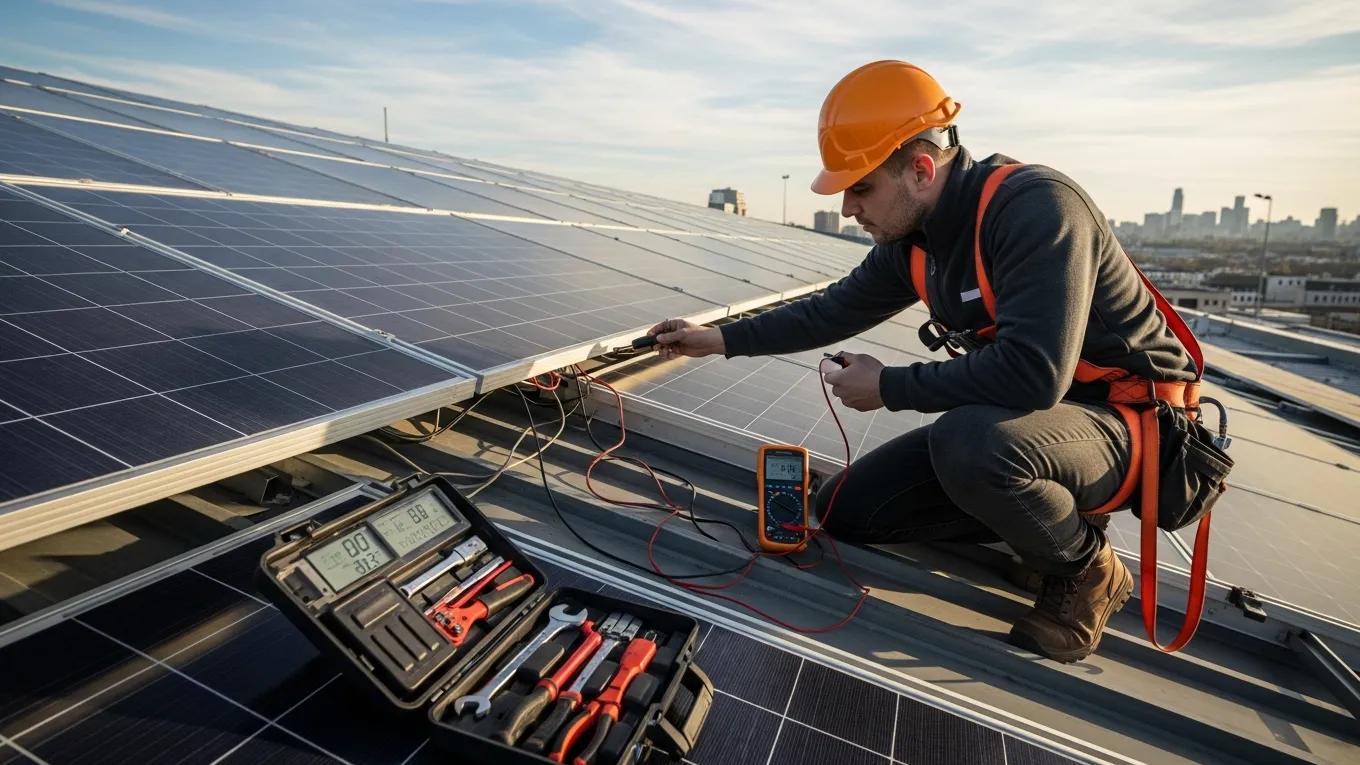
Keeping your solar panels well maintained protects performance and stretches their lifespan. Weather and seasonal shifts affect output, so homeowners should adapt care throughout the year. This guide breaks down the essential tasks for spring, summer, fall, and winter, plus safe cleaning methods, inspection steps, and practical repair advice. Use these tips to get the most from your solar investment while avoiding preventable repairs.
Key Takeaways
- Maintenance changes by season to address specific weather challenges and keep energy production steady year-round.
- Spring is ideal for clearing winter debris and checking for damage before small problems grow.
- Summer calls for monitoring storm impacts and removing dust to protect peak output.
- In fall, clear leaves and prep panels for winter to keep production consistent.
- Winter care focuses on safe snow removal and inspections for cold-related wear.
- Regular cleaning with soft tools and mild detergents prevents surface damage and improves longevity.
- Annual professional inspections and prompt repairs preserve efficiency and protect warranty coverage.
- Snow, dust, and heavy rain all influence photovoltaic performance and require proactive care.
- Call a pro for serious damage, electrical faults, or any work that requires unsafe roof access.
Essential Solar Panel Maintenance Tasks by Season
Each season brings different maintenance priorities. Aligning tasks with the time of year keeps your system operating efficiently.
Spring:
After winter, remove salt, leaves, and other buildup and inspect panels for cracks or loose wiring. A thorough spring check prevents small winter damages from becoming costly repairs. Clean glass surfaces gently to restore sunlight exposure and verify electrical connections are secure.
Summer:
Summer’s high sun means peak production, so watch for storm damage and dust accumulation. Inspect mounts, fasteners, and the inverter after severe weather, and rinse off dust to maintain optimal output during the busiest season for generation.
Fall:
As leaves fall, clear debris that can shade panels or clog nearby gutters. Use fall inspections to catch any wear from summer heat and to prepare panels and wiring for colder, wetter months.
Winter:
Snow and ice can block sunlight and stress seals. Remove snow gently with appropriate tools and check for insulation or seal damage caused by freeze-thaw cycles. Regular winter checks help panels recover quickly when days lengthen.
Expert Cleaning Techniques:
Cleaning safely preserves coating integrity and restores output. Use soft brushes or sponges, lukewarm water, and mild detergents designed for solar surfaces. Avoid pressure washers and abrasive tools that can scratch or damage the glass and frames.
Inspection Procedures:
Regular inspections catch issues early. Look for cracks, loose mounts, corrosion, damaged wiring, and inverter alerts. Track energy output trends to spot performance drops that visual checks might miss.
Repair Tips:
Address common problems quickly: replace cracked modules, tighten or replace loose fittings, and call a qualified electrician for wiring or inverter repairs. Simple fixes can prevent larger failures and protect warranty coverage.
If you prefer not to DIY, certified technicians can handle service, giving you confidence that the system is safe and performing as expected.
How to Perform a Solar Panel Inspection Checklist Each Season
Use a seasonal checklist to keep inspections consistent and thorough:
- Spring: Clean panels, inspect for winter damage, and verify all electrical connections.
- Summer: Check for storm damage, clean off dust when needed, and monitor production readings.
- Fall: Remove leaves and debris, inspect for summer wear, and prepare seals and gutters for winter.
- Winter: Safely remove snow, check seals and mounts for cold-weather stress, and note any hidden damage.
A clear, routine approach helps you maintain steady generation throughout the year.
What Solar Panel Cleaning Tips Ensure Optimal Performance Year-Round?
Follow these cleaning best practices to keep panels operating well:
- Use soft materials: Soft brushes or sponge cloths clean without scratching coatings.
- Avoid harsh chemicals: Choose mild detergents or cleaners formulated for solar glass.
- Schedule cleanings regularly: Clean after major storms and at least twice a year to prevent buildup.
Regular, gentle cleaning helps panels stay at peak efficiency across seasons.
How Do Seasonal Environmental Factors Affect Solar Panel Efficiency in North and South Carolina?
Seasonal conditions in North and South Carolina change how your system performs and what maintenance it needs:
- Summer: Longer days boost generation, but high heat can lower inverter efficiency and stress components.
- Winter: Shorter days and snow or ice reduce available sunlight and require extra clearing and checks.
- Fall: Falling leaves can shade panels and should be removed regularly.
- Spring: Rain and wind often clear dust and pollen, improving output—but check for storm damage.
Tailoring maintenance to local seasonal patterns helps maximize annual energy production.
What Impact Do Snow, Dust, and Rain Have on Photovoltaic Systems?
Snow and dust block sunlight and lower generation; rain can act as a natural rinse that improves performance. Regular monitoring and scheduled cleanings reduce the negative effects of these elements and keep output consistent.
How Does Seasonal Weather Influence Solar Inverter Performance and Maintenance Needs?
Inverters respond to temperature swings: extreme heat can reduce efficiency, while cold can expose vulnerable seals or wiring. Include inverter checks in seasonal inspections and follow the manufacturer’s service recommendations to extend its life.
When Should Homeowners Schedule Professional Solar Panel Repair Services?
Consider professional service in these situations:
- Following severe weather: Inspect after storms, hail, or high winds for hidden damage.
- When energy output decreases: A measurable drop in production can signal system faults.
- At least once a year: Annual professional inspections catch issues that routine homeowner checks might miss.
What Are Common Signs Indicating the Need for Solar Panel Repairs?
Watch for these warning signs:
- Visible damage: Cracks, chips, or broken frames on modules.
- Reduced energy output: Persistent declines in generation compared to historical norms.
- Unusual noises: Grinding or buzzing from the inverter or electrical components.
Early detection lets you fix problems before they become costly.
How Often Should Professional Maintenance Be Conducted to Protect Warranty and System Lifespan?
Most homeowners should schedule a professional inspection at least once a year. Regular service keeps warranties valid, identifies wear early, and helps sustain long-term performance.
What Are the Cost and Benefits of Regular Solar Panel Maintenance Services?
Understanding maintenance costs helps weigh the value of regular service. Typical visits range from $150 to $300, depending on scope. Key benefits include:
| Benefit | Description | Value |
|---|---|---|
| Enhanced Efficiency | Regular cleaning and inspections prevent energy loss | Up to 25% increase in energy output |
| Prolonged Lifespan | Timely repairs and maintenance extend system life | 10-20 years additional lifespan |
| Compliance with Warranty | Keeping up with regular maintenance ensures warranty validity | Protects your financial investment |
Routine maintenance is an investment that helps protect performance, warranties, and long-term value.
How Does Seasonal Maintenance Improve Solar Panel Efficiency and Reduce Repair Expenses?
Seasonal upkeep addresses the specific stresses panels face throughout the year. Keeping surfaces clean, mounts tight, and components inspected reduces energy losses and lowers the chance of costly emergency repairs. Regular care translates into steadier output and smaller long-term expenses.
What Are Typical Pricing Models for Residential Solar Panel Upkeep in North and South Carolina?
Service costs vary by region and provider. Typical price ranges to plan for include:
| Service Type | Cost Range | Frequency |
|---|---|---|
| Cleaning | $150 – $200 | Semi-annually |
| Inspections | $100 – $150 | Annually |
| Repairs | $100 – $300 | As needed |
Knowing these typical costs helps homeowners budget for effective, ongoing care.
How Can Homeowners Perform Seasonal Solar Panel Upkeep Safely and Effectively?
Follow these practical safety and efficiency tips:
- Use appropriate tools: Extension poles, soft brushes, and approved cleaning solutions reduce risk and protect panels.
- Assess weather conditions: Work only in dry, calm weather to avoid slips and accidental damage.
- Follow a structured schedule: Track seasonal tasks so inspections and cleanings aren’t missed.
These habits keep systems efficient while minimizing safety risks.
What Tools and Techniques Are Recommended for DIY Solar Panel Cleaning?
For safe DIY cleaning, assemble the right tools and follow gentle methods:
- Soft brush or sponge: Cleans without scratching.
- Mild detergent or specialized cleaner: Protects coatings while removing grime.
- Water hose: Rinse with a gentle spray—avoid high-pressure streams.
Using these tools helps you clean effectively without harming the panels.
When Is It Necessary to Avoid DIY and Seek Expert Assistance?
Hire a professional when risks or complexity rise above basic cleaning:
- Severe damage: Structural or complex electrical repairs need experts.
- High roof access: When safe access requires ladders or harnesses, use trained technicians.
- Electrical issues: Any wiring or inverter faults should be handled by qualified electricians.
Choosing professionals in these cases protects your safety and the system’s integrity.
Frequently Asked Questions
1. How can extreme weather conditions impact solar panel maintenance?
Extreme weather—heavy rain, snowstorms, hail, or heatwaves—alters maintenance needs. Rain can wash away dirt but also carry debris; snow blocks sunlight and requires removal; heat stresses inverters and mounting hardware. Adjust checks and cleanings during or after extreme events to keep the system reliable.
2. What are the environmental factors that homeowners should monitor throughout the year?
Monitor dust, nearby foliage, and seasonal weather patterns. Dust and pollen reduce light transmission, falling leaves shade panels in autumn, and storm debris can cause damage. Regular visual checks and scheduled cleanings help you respond before performance drops.
3. Are there specific tools recommended for safe solar panel cleaning?
Use lightweight extension poles, soft brushes or squeegees, and a hose with a gentle spray setting. Avoid metal or abrasive tools that can scratch glass and never use high-pressure washers. Specialized cleaners formulated for solar glass are a safe choice.
4. How can homeowners identify when professional help is needed for repairs?
Call a professional if you see broken or cracked panels, major drops in energy output, loud or unusual noises from the inverter, or if work requires high-elevation access. Electrical faults and structural damage should always be handled by trained technicians.
5. What potential long-term cost savings can result from regular maintenance?
Regular maintenance reduces emergency repairs and improves efficiency—potentially increasing output by up to 25%. That higher production lowers energy bills and, by extending system life by 10–20 years, reduces replacement costs over time.
6. How do warranties affect the need for regular solar panel maintenance?
Warranty terms often require documented maintenance. Skipping scheduled inspections or neglecting repairs can void coverage. Staying current with recommended maintenance helps protect warranty claims and your investment.
7. Can performing DIY maintenance create risks for homeowners?
Yes. DIY upkeep carries risks—falls from roofs, electrical hazards, and accidental panel damage. If you lack safe access, the right tools, or the expertise, hire a professional to avoid injury and costly mistakes.