
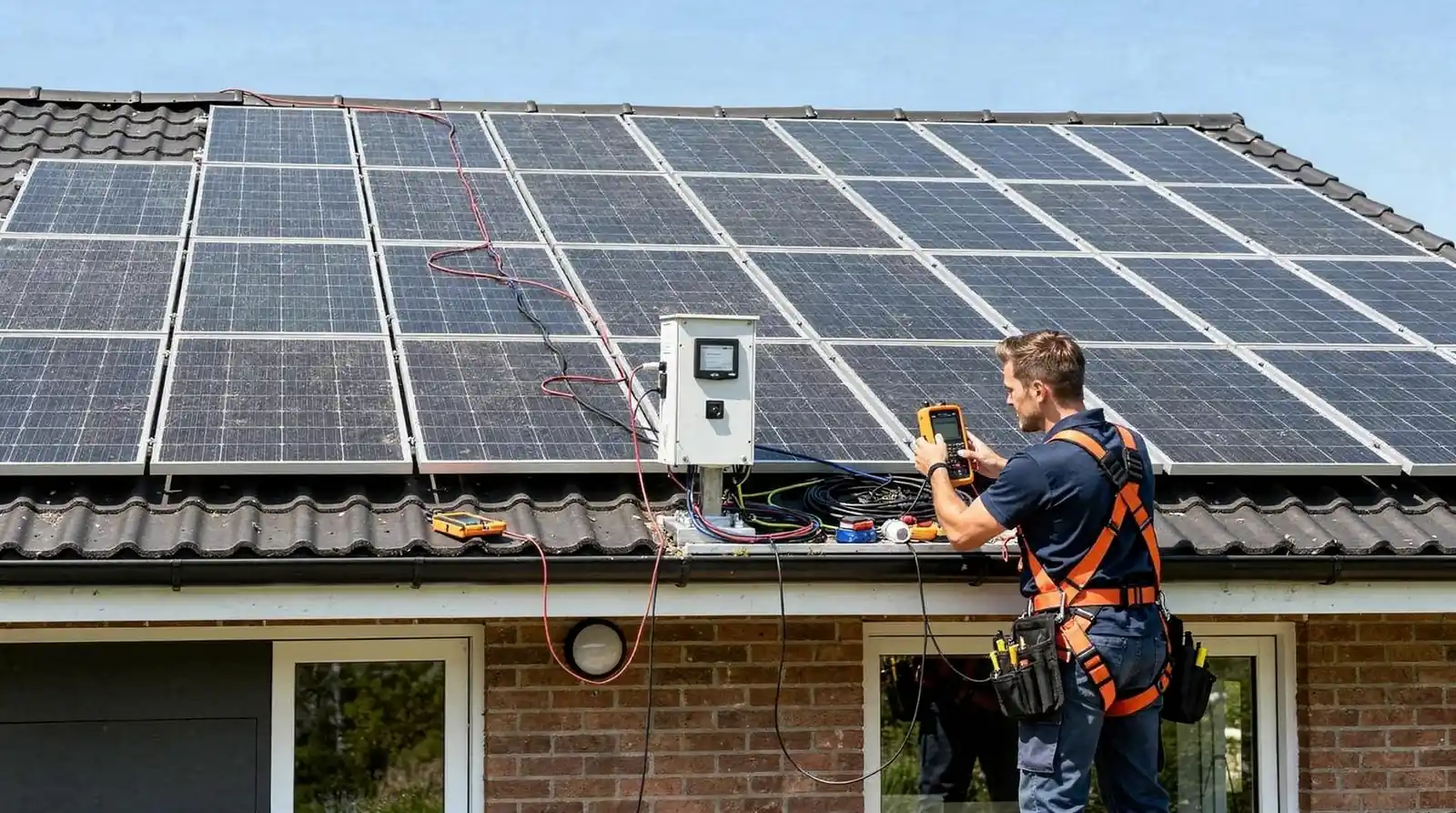
When it comes to solar panel repair, solar Guardian Services provides local repair warranties covering workmanship and parts, giving homeowners reliable protection even when original installers are unavailable. Coverage includes repairs, panel cleaning, and maintenance plans, ensuring systems run at peak efficiency. Solar Guardian stands behind every repair with dependable, transparent warranty terms.
Warranty coverage often spans 25 years for solar panels. Solar Guardian Services provides support even if your original installer disappears. Solar Guardian Services steps in when that happens, pairing real-time performance monitoring with inspections, cleaning, and repairs to keep your system running at peak efficiency and maximize your savings.
Solar panel warranties typically cover equipment defects, performance degradation, and workmanship issues, but coverage varies by manufacturer and installer. Homeowners whose original installer has gone out of business, such as SunPower, often lose access to warranty support entirely. Solar Guardian Services reviews existing warranty documents and provides ongoing monitoring, inspections, and repairs regardless of who performed the original installation.
Key Takeaways
- Solar panel warranties typically cover defects and performance issues for 25 years or more.
- Equipment warranties protect against manufacturing failures, while performance warranties guarantee minimum energy output levels.
- Many homeowners face gaps when original installers close or cease operations, Solar Guardian Services bridges this support.
- Real-time monitoring detects underperformance early, helping you maximize savings and protect your solar investment.
What Do Solar Panel Warranties Actually Cover?
Coverage depends on the type of warranty in question, and homeowners often assume one document protects everything. That assumption causes trouble. A solar warranty isn’t a single piece of paper; it’s actually a combination of separate agreements between the installer and the manufacturer, each covering different parts of the system.
Solar panel warranties exist primarily to guard against two problems: physical damage to the panels and unexpected loss of efficiency over time. Panels are built to perform for decades, but defects happen. Efficiency can drop faster than expected due to manufacturing flaws or environmental wear. A solid warranty accounts for both risks.
Does a warranty cover labor costs for repairs?
Labor coverage varies significantly depending on who issued the warranty and what it specifically includes. Some agreements cover parts but leave homeowners responsible for the cost of the service call itself. This gap catches many homeowners off guard, especially when solar panel repair work requires a licensed technician.
What happens if a component fails but the panel itself is fine?
Equipment beyond the panels, like inverters or mounting hardware, typically falls under separate coverage terms. A homeowner might have full panel protection while inverter issues sit outside that agreement entirely.
Because warranty structures get complicated fast, Solar Guardian Services steps in to help homeowners make sense of coverage gaps and ongoing system needs. Monitoring, inspections, cleaning, and repair services get paired with maintenance plans built for long-term protection. Continuous oversight combined with expert care keeps a system running at peak efficiency, which protects both the equipment and the savings that solar was supposed to deliver in the first place.
Why Do Warranty Terms Vary So Widely?
Manufacturers write warranty terms differently because coverage depends on the brand, the panel model, and what type of protection is included. Nearly every solar panel on the market carries some form of 25-year warranty. The fine print behind that number changes drastically from one manufacturer to the next. A 25-year promise from one brand rarely matches a 25-year promise from another.
The documents themselves add to the confusion. Solar panel warranties often run for pages, filled with dense technical language that makes direct comparisons difficult. Since coverage terms vary by manufacturer. By panel model, homeowners comparing two systems side by side often find themselves reading two entirely different rulebooks.
What do most solar warranty conversations leave out?
Most public discussion centers on the panels themselves, skipping over service and labor coverage entirely. That gap matters. A panel warranty might replace a defective unit. It says nothing about who pays to diagnose the problem or perform the solar panel repair.
Homeowners should look for answers to a few key questions before assuming their system is covered:
- Does the warranty include labor costs, or only replacement parts?
- Is service coverage tied to the original installer, and does it survive if that installer closes?
- Does the warranty address performance degradation, or only outright failure?
Routine professional service closes some of that gap regardless of warranty language. Regular inspections and maintenance keep solar efficiency high, protect the roof beneath the panels, and help the investment keep performing reliably for years to come.
What Happens If Your Installer Goes Out of Business?
Homeowners lose their main point of contact when a solar installer closes. The panels on the roof still need care. A closed business cannot honor solar panel warranties or schedule service calls, leaving homeowners to sort out next steps alone. Solar Guardian Services fills that gap, stepping in with real-time performance monitoring, inspections, cleaning, and repairs even when the original company is long gone.
This scenario happens more often than most homeowners expect. Entire companies have shifted their business models overnight, halting new installations and project support with little warning to existing customers. When that kind of disruption hits an entire industry, homeowners with older systems are often the ones left scrambling for help.
What if a solar company won’t return calls anymore?
Unreturned calls usually signal a bigger problem: the installer has scaled back operations or shut down completely. Homeowners in this position are not alone. Solar Guardian steps into these exact situations, offering ongoing maintenance plans and solar panel repair. A missing installer never means a missing safety net.
Can a homeowner still get repairs without the original installer?
Yes. Ongoing service does not depend on the company that installed the system in the first place. Solar Guardian provides trusted repair work and continued monitoring regardless of who handled the original installation.
Homeowners facing this situation typically need three things right away:
- A working system diagnosis to confirm current performance
- Access to repair services without waiting on a defunct company
- A maintenance plan that keeps future issues from going unnoticed
Solar Guardian is built to answer all three, keeping homeowners protected long after the original installer disappears.
Is Your Solar Repair Covered or Out of Pocket?
Coverage depends on two things: what the original manufacturer warranty promised, and whether a service plan fills the gaps that warranty leaves behind. Many homeowners discover the hard way that a broken inverter or a wiring fault isn’t automatically free to fix, even years into ownership. Standard manufacturer warranties often skip labor charges and service costs, leaving homeowners to cover those expenses out of pocket. A dedicated solar panel warranty plan changes that equation by protecting against unexpected repair costs, labor charges, and service issues that manufacturer coverage typically won’t touch.
What if my original solar installer is out of business?
This is one of the most common questions homeowners ask. Solar companies close, merge, or exit local markets. When that happens, the manufacturer warranty on the panels themselves often stays valid. The installer’s workmanship warranty disappears with the business. A qualified maintenance provider can still diagnose issues, coordinate manufacturer claims where possible, and handle solar panel repair even without the original installer involved.
How can homeowners tell if their system is actually working?
Many homeowners simply don’t know whether their panels are producing power correctly on any given day. Without a dashboard or alert system, a drop in output can go unnoticed for weeks, quietly cutting into savings or spiking utility bills. Real-time performance tracking closes that gap by flagging problems early, before small issues become expensive ones.
Coverage checklist before paying out of pocket:
- Confirm whether the manufacturer warranty is still active
- Check if labor and diagnostic costs are included or excluded
- Verify installer status and workmanship warranty validity
- Review whether a service plan already covers the repair type in question
How Can Ongoing Monitoring Prevent Costly Repairs?
Ongoing monitoring catches small performance drops before they turn into expensive failures. A system losing efficiency often shows warning signs weeks or months before a breakdown. Regular tracking spots those signs early, giving homeowners time to schedule solar panel repair before damage spreads or warranty windows close.
Dirty panels offer a clear example. Grime buildup sounds minor, but dirty solar panels create a bigger efficiency problem than most homeowners realize. Dust, pollen, and debris block sunlight from reaching the cells. That loss compounds month after month without anyone noticing until the utility bill arrives.
What happens if a roofer won’t work around solar panels?
Roof replacement gets complicated fast when contractors refuse to touch an existing solar array. Many roofers simply won’t remove or reinstall panels, leaving homeowners stuck between two separate contractors. Specialized solar maintenance support fills that gap, handling the removal and reinstallation so the roofing job doesn’t stall.
How does monitoring help homebuyers inherit a solar system?
Buyers taking on a home with solar already installed need proof the system actually performs as promised. Monitoring data answers that question quickly, without guesswork or waiting for the first high bill to reveal a problem.
The strongest protection plans go further than repairs alone. The most effective coverage combines three elements:
- Long-term labor coverage for ongoing repair needs
- Continuous monitoring to catch issues early
- Protection against installer or manufacturer failure, so homeowners aren’t left stranded
Reviewing solar panel warranties alongside a monitoring plan helps homeowners understand what’s covered, what isn’t, and who to call when something goes wrong. That combination protects the investment long after the original installer leaves the picture.
FAQ
What does a solar panel warranty typically cover?
Solar panel warranties typically cover equipment defects, performance degradation, and workmanship issues, with coverage spanning 25 years. Terms vary by manufacturer and installer, so homeowners should review their specific documents carefully.
What happens to my warranty if my installer goes out of business?
Warranty protection often ends when the original installer disappears, leaving homeowners without support. Solar Guardian Services steps in by reviewing existing warranty documents and providing ongoing monitoring, inspections, and repairs regardless of who performed the original installation.
Does a solar panel warranty cover labor costs for repairs?
Some agreements cover parts but leave homeowners responsible for the service call cost, which can catch homeowners off guard.