
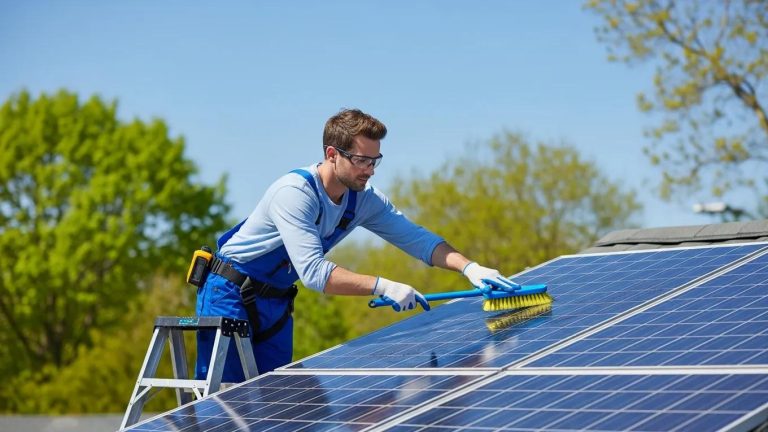
Dirty panels lose sunlight — and money. Keeping your solar array clean is one of the simplest ways to protect production and extend system life. Below you’ll find straightforward, expert-backed advice on how often to clean, which techniques work best, what to watch for each season, and when hiring pros makes sense. Follow these steps and your panels will capture more sunlight with less fuss.
Key Takeaways
- Set a cleaning schedule based on your local conditions to prevent energy loss.
- Professional cleaners use low-impact, eco-friendly tools and training to protect panels.
- Gentle rinsing, soft-bristle brushes, and biodegradable cleaners remove grime without damage.
- Seasonal care — pollen, snow, leaves — keeps production steady year-round.
- Quick visual checks reveal damage, shading, or drops in output that need attention.
- Trim nearby plants to stop shade and debris from cutting into production.
- Track energy output to know when cleaning or repairs are needed.
- Choose cleaning products that are safe for landscaping and local wildlife.
- Keep records of maintenance for warranties and resale value.
Regular Cleaning Schedule
Establishing a simple, regular cleaning routine preserves panel performance. How often you clean depends on local dust, pollen, bird activity, and weather. Homes near dusty roads, construction sites, or large trees typically need more frequent attention. A proactive routine helps avoid gradual production losses that are easy to miss.
How Often Should You Spring Clean Solar Panels in North and South Carolina?
In the Carolinas, spring cleaning frequency depends on local pollen and dust. If pollen or dust builds up quickly, plan to clean every 4–6 weeks during peak seasons. In milder areas, every 2–3 months is often enough. Use your system monitoring to fine-tune timing — if output drops, it’s time to act.
Professional Cleaning Services
Hiring a pro can save time and reduce risk. Trained technicians bring the right tools, safety practices, and eco-friendly products to clean panels safely — especially on steep roofs or large arrays. Professionals also spot issues you might miss and can coordinate repairs if needed.
How Much Does Professional Solar Panel Cleaning Cost in the Carolinas?
Prices in the Carolinas typically range from $150 to $300 for a comprehensive cleaning, depending on roof access and array size. Many homeowners find the improved energy output and longer equipment life make that an easy investment.
Choosing the right cleaning method matters for both performance and panel longevity. Dust and stains reduce PV efficiency, so routine cleaning is important. Researchers review a wide range of methods — from natural rain-based cleaning and manual washing with brushes to automated mechanical systems, water-spray systems, ultrasonic vibration, electrostatic cleaners, and hydrophilic or protective coatings. This overview helps owners and technicians pick the best, least-damaging option for long-term efficiency. A study on impact of various solar panel cleaning methods on its performance, P Patane, 2022
Cleaning Techniques
Use techniques that remove grime without scratching or stressing the glass. Match the method to how soiled the panels are and how they’re mounted. Common, effective approaches include:
- Low-Pressure Rinsing: Rinse loose dirt with low-pressure water to avoid damaging seals and coatings.
- Soft-Bristle Brushes: Pair rinsing with a soft brush on an extension pole to lift stubborn residue safely.
- Eco-Friendly Cleaning Solutions: Biodegradable soaps and cleaners remove film without harming nearby plants or wildlife.
These methods balance cleanliness with care to keep panels producing efficiently over time.
What Are the Best Solar Panel Cleaning Methods and Tools?
Effectiveness comes down to the right tools for the job. Consider ease of access, level of buildup, and environmental impact when choosing equipment.
| Cleaning Method | Tool Used | Benefits |
|---|---|---|
| Low-Pressure Rinsing | Hose with spray nozzle | Removes loose dirt gently, minimizes risk of damage |
| Soft-Bristle Brushes | Extension pole-mounted brushes | Dislodges stuck debris while protecting the glass |
| Eco-Friendly Solutions | Biodegradable soaps | Effective cleaning without harmful runoff |
Choosing the proper tools improves cleaning results and reduces the chance of accidental damage.
Innovations like automated cleaners are making maintenance easier for large or hard-to-reach installations.
Automated Cleaning Robots Improve Efficiency
As solar adoption grows, automated cleaning systems — including robotic cleaners — are being developed to keep arrays clear with minimal labor. These technologies can be especially useful for large installations or locations where manual cleaning is impractical.
Seasonal Maintenance
Each season brings different challenges. Pollen and dust pile up in spring, summer storms can leave debris, fall drops leaves, and winter brings snow and ice. Planning seasonal checks and clearings keeps panels working well through the year.
Can Seasonal Weather Conditions Impact Solar Panel Maintenance Needs?
Absolutely. Heavy rain, hail, ice, or high winds can cause damage or move debris onto panels. In snowy regions, removing snow buildup can maintain winter output. After severe weather, inspect panels for both soiling and physical harm.
Visual Inspections
Quick visual checks help you spot problems early. Look for cracked glass, loose wiring, accumulated dirt, bird droppings, or anything casting shade. Catching issues early often avoids costly repairs.
What Are Signs That Your Solar Panels Need Immediate Attention?
- Drop in Energy Production: Sudden or sustained output declines can signal soiling or system faults.
- Physical Damage: Cracks, chips, or visible wiring problems need prompt professional assessment.
- Obstructions: Leaves, nests, or debris shading panels should be cleared quickly.
Addressing these signs promptly helps protect both performance and warranty coverage.
Vegetation Management
Keep nearby trees and shrubs trimmed so panels get full sun. Overhanging branches not only cast shade but can drop leaves and twigs that accumulate on panels after storms. Regular trimming reduces maintenance needs and improves year-round output.
How Do Local Environmental Factors Influence Service Selection?
Your location guides the best service choice. In high-dust or heavy-pollen areas, look for providers that use gentle, eco-friendly cleaning methods and equipment designed for frequent maintenance to protect local plants and wildlife.
Monitoring Performance
Use system monitoring to spot gradual declines before they become big problems. Most installations offer apps or portals that display current and historical output — a reliable way to tell when cleaning or diagnostics are needed.
What Are the Energy Savings from Routine Solar Panel Maintenance?
Regular maintenance can boost energy production significantly — often in the 20–30% range compared with neglected panels. That means lower bills and a faster return on your solar investment.
Environmental Considerations
Choose cleaners and methods that protect soil and water. Biodegradable products and low-water techniques reduce environmental impact while keeping panels clean and efficient.
What Should You Look for in a Professional Solar Panel Cleaning Company?
- Experience and Reputation: Pick companies with solid track records and customer reviews.
- Safety Practices: Confirm they follow safe roof access and fall-protection procedures.
- Insurance and Certifications: Make sure the provider is insured and staffed by trained technicians.
Those checks help ensure a safe, effective service that protects your panels and property.
Documentation
Keep dated records of cleanings, inspections, and repairs. Good documentation supports warranty claims and shows prospective buyers your system has been well cared for.
Which Maintenance Practices Complement Spring Cleaning?
Pair spring cleaning with a full visual inspection, trim nearby vegetation, and address small repairs right away. That combined approach boosts efficiency and reduces the chance of surprises later in the year.
How Can Regular Maintenance Extend Your Solar Panel System’s Lifespan?
Routine cleanings and inspections prevent buildup and catch minor damage before it worsens. With proper care, solar panels commonly last 25–30 years, making regular maintenance a cost-effective way to protect your investment.
Frequently Asked Questions
1. What are the benefits of using eco-friendly cleaning products for solar panels?
Eco-friendly cleaners remove dirt without harming gardens, soil, or local waterways. Biodegradable soaps rinse clean and leave no toxic residues, aligning your maintenance with the sustainability goals of your solar system.
2. How can I check the energy output of my solar panels?
Most systems include monitoring tools — apps or web dashboards — that show real-time and historical production. Check those regularly, and watch inverter lights for basic operational status. Drops in output usually point to soiling or system issues.
3. What is the impact of bird droppings and debris on solar panel efficiency?
Bird droppings and organic debris can block sunlight and reduce production — sometimes dramatically. They can also attract moisture and create corrosive spots. Regular cleaning prevents these issues from reducing long-term performance.
4. Can I clean my solar panels myself, and what precautions should I take?
Yes — if it’s safe to reach them. Use low-pressure water, soft brushes, and gentle cleaners. Stay on stable ground or use proper ladders and fall protection; if access is risky, hire a professional.
5. How do solar panel warranties interact with maintenance activities?
Manufacturers often expect regular maintenance. Keep detailed records of cleanings and inspections so you can prove proper care if a warranty claim arises. Neglecting maintenance can complicate claims.
6. What seasonal changes should I be aware of when maintaining solar panels?
Spring brings pollen, summer can bring storms and dust, fall drops leaves, and winter adds snow and ice. Time cleanings and inspections around these events to keep production consistent.
7. What are the pros and cons of automated solar panel cleaning systems?
Automated systems and robots reduce labor and provide regular cleaning, which is great for large or remote arrays. They can be costly up front and may need their own maintenance, so weigh the benefits against the investment for your site.
Consistent cleaning, seasonal care, and regular monitoring are simple ways to protect production and extend the life of your solar investment. Whether you handle cleaning yourself or hire a pro, a little attention goes a long way toward keeping your panels operating at their best.